Showing posts with label Biodiversity. Show all posts

Monday, November 19, 2012

BioBlitz leads to new web resource

The buzz is the 2012 Korrelocking BioBlitz was a great success!

Korrelocking BioBlitz Volunteers

Thanks to all the keen people who came along to join in this year, the Team Leaders who bravely led their groups into the wilds of Korrelocking and of course Phil and Sharon who put up with all the unusual comotion on their property!

For details on the current findings from the BioBlitz see the following media release or listen to the ABC radio interview here.
Little Eagle. Photo by Alan Throne

After a great weekend of adventure, social media updates, discovery and hopefully fun for all, the hard graft of getting together the BioBlitz report has begun.

The species lists are growing and the need for management of several issues within the reserve is growing apparent.

Flora Team. Photo by Vicki Warburton

Wheatbelt NRM has already recieved three requests for assistance from groups wishing to organise their own BioBlitz in 2013!

In response to these requests we created a new web-resource and tool kit, to assist any keen BioBlitz organisers out there.


There are some great tips for BioBlitz organisers on the new page, including some key questions, tips for finding leaders, tools to help find outmore about your area and some useful links to other resources.

Looking foward to the next BioBlitz


If you are keen to find out more, or get involved in biodiversity projects in and around the wheatbelt, contact Wheatbelt NRM on 9670 3100, info@wheatbetltnrm.org.au or www.wheatbeltnrm.org.au to find out more.


Tuesday, August 7, 2012

2012 Korrelocking BioBlitz!


This year Wheatbelt NRM is organising a BioBlitz in the Korrelocking Townsite, 230km east of Perth, to raise awareness of the need for increased management of remnant vegetation across the Western Australia's Wheatbelt.

The aim of the BioBlitz is to identify as many species as possible in a 24hr period (between 1pm Sat 22nd & 1pm Sun 23rd September 2012) and have fun while we're doing it!

Participants at the 2003 Moningarin BioBlitz

Spring in Korrelocking presents a chance to observe a diverse and functional ecosystem in action - a chance to appreciate the resilience of natural ecosystems to current practices.

After lunch on Sunday we will tally the lists and announce the total number of species that are found - then we begin the process of planning with the community how they wish to manage the bushland into the future.

So join us and experience your own wheatbelt adventure - visit  the Wheatbelt NRM website for additional camping and registration information.

Thursday, July 12, 2012

Spiders walk along the Avon River

Trapdoor spiders often emerge from their burrows after rain - but why?

Newly matured male spiders emerge from their burrows and go looking for a mate, after spending anywhere from three to seven years living exclusively underground.

If you live in the micro-world, moist soil is perfect for digging in - so many types of juvenile trapdoor spider emerge after rains to start excavating their own private burrows. It's important for them to find a good spot, as they will stay there for life!!


This Mouse Spider (Missulena spp.) was walking along with purpose under some Jam (Acacia accuminata) trees down by the Avon River in Northam. He seems to know where to go, but he'd better look out - there's an army of obstacles for him to avoid, like:
  • large hungry centipedes looking for a bite to eat,
  • cunning wasps who would might carry them away;
  • sharp eyed magpies and butcher birds who watch for tasty spiders at dawn and dusk, and
  • racehorse goanna's and bandicoot's who can dig them out of their burrows!
No wonder he's moving so fast!


So, if you see a big spider walking along the ground this winter/autumn, spare a thought for the hard times it has overcome to get that far and take a moment to watch it go along on it's way.

Do feel free to take a picture though, and send it to info@wheatbeltnrm.org.au so Wheatbelt NRM can help you find out a bit more about it.

The last one we had someone ask us about was a brand new species all together!

Tuesday, February 28, 2012

Wheatbelt NRM Takes Biodiversity Conservation Global!

Since it's launch in June 2010, Wheatbelt NRM's Biodiversity Blog has been spreading the word about what's happening in the Avon's backyard to the rest of the globe!

But have you ever wondered who else is listening and watching what's happening here...?

A review of the visitor summary shows that about half of our 3000 visitors so far have been from Australia, while another quarter that amount are from the United States.

Pie chart of this blog's audience composition

Fully one fifth of our visitors are from farther afield -India, France and Italy to name a few. They log-in from across the globe to look at great photos and read interesting stories about what's going on in places like Toodyay, Mukindudin or Corrigin. Or to find our more about our projects to protect threatened species or control Weeds of National Significance (WONS).

Map of this Blog's audience from around the globe!

The strong interest from around the globe in Wheatbelt NRM's Biodiversity Program's projects and the plants and animals they protect is testament to the hard work and passion our community and it's many groups community puts towards sustaining our natural heritage.

High value hay grown in a 'backyard' paddock protected by remnant vegetation

By working with our community to protect it's natural heritage, Wheatbelt NRM is also helping to buffer our agricultural industries from the effects of climate change and variable seasonal influences. We are proud to be working at a local level and having a truly global impact!

Wheateblt NRM wold like to say a big HELLO (Ola! Guten Tag! привет! Bonjour!)  to our global audience - and invite you all back again sometime soon to see that 'There's a lot happening in our backyard!'

Wednesday, December 7, 2011

Frog Watch in Quairading

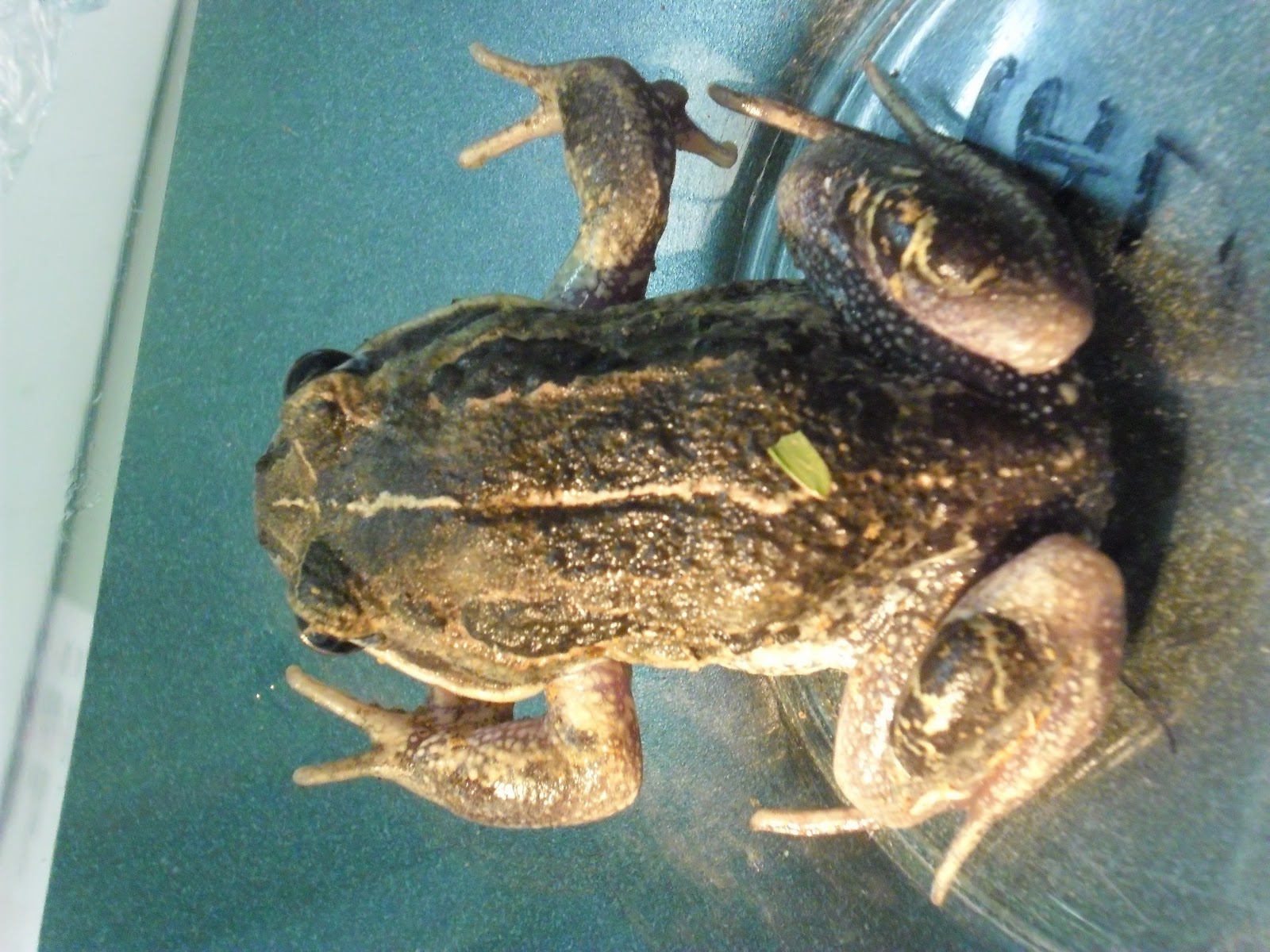
After a bit of wet weather recently, a couple of sharp-eyed residents from Quairading sent these pictures of a frog to the Shire's Environmental Officer earlier this month, concerned that it may have been an invasive Cane Toad.


Luckily it was identified as a Western Banjo, or Pobblebonk, Frog (Limnodynastes dorsalis) from the pale 'dorsal' line down the frogs back. These frog are most common in permanent and temporary water including farm dams, swamps, wetlands and streams, but can also be found in backyards across the entire south-west.


From Frog Watch Website


Western Banjo Frogs and Cane Toads  are commonly confused with each other, so if you see someting similar and you are not sure what it is, take a photo and/or report it to your local authorities so they can help with an identififaction. Your vigilance could make a difference.

In comparison, the Cane Toad (Bufo marinus) is much larger, more warty and does not have a pale 'dorsal' line down its back.

G Millen © Australian Museum
H Ehmann ©  Australian Museum

The distribution of the Cane Toad is still being resolved in Australia - the map below shows past, current and predicted range across the nation.

Distribution map for Cane Toads in Australia - note SW WA prediction

An awareness of what Cane Toads look like is one of the biggest assets our community has in the fight against this tropical invader. Although WA is almost Cane Toad free, there is a large potential for this invasive species to impact on our biological and agricultural values.

So, hats-off to the couple from Quairading who wanted to be sure their frog was not a Cane Toad - a little bit of effort can go a long way!
For more info on Wheatbelt frogs you may want to visit the Frog Watch website.

For more info Cane Toads you may want to visit the Toad Busters website.

Email info@wheatbeltnrm.org.au if you want any additional information.